Socially Responsible Business
A Tarnish on Green Goods
Why eco-friendly products may be bad for the environment.
Organic Exchange uses its global network to promote environmentally friendly fibers.
Many companies now acknowledge the financial benefits of socially responsible behavior over the long term. Such commitments, however, are managed with levels of involvement spanning from a centralized CSR office to a fully integrated approach calling on all mainstream operating departments in the organization. This panel discussion explores strategies to advance corporate social responsibility in large companies.

The San Francisco Recycling Center gussies up the globe with recycled paint.
Vyomesh Joshi is an executive vice president at Hewlett-Packard who has helped lead the company to success over the past 25 years. In this audio lecture, Joshi discusses how HP is integrating social and environmental responsibility into its bottom line with efforts such as a program to retrieve and recycle 200 million pounds of used inkjet and LaserJet printer cartridge paraphernalia each year.
How the Union Bank of California attracts lower-income people to traditional banking.
Socially responsible brands that merge with multinationals may be abandoning their principles
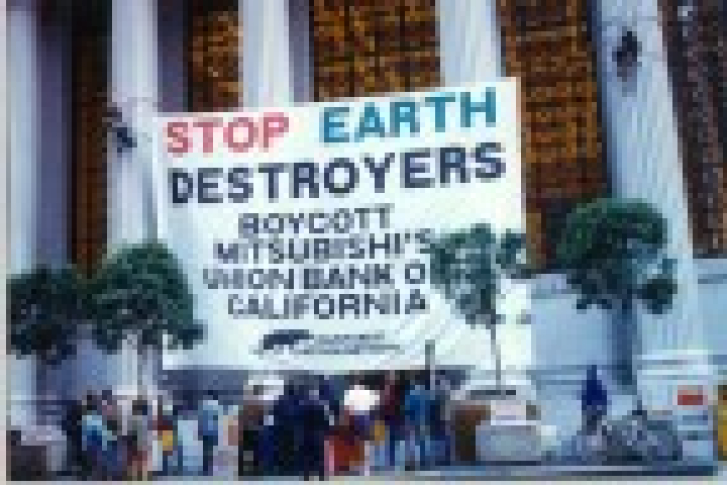
The Rainforest Action Network launched a consumer boycott of several Mitsubishi companies, leading to significant changes in the way the firm and many of its partners do business.
Consumers say they want to buy green products but they don't always follow through. There are, however, strategies corporations can take to increase sales of sustainable goods.
As the world awakens to the challenges of global warming and water shortages, corporations slowly recognize the reduction of their environmental footprint as a significant component of corporate social responsibility. This panel discussion explores some of the leading corporate initiatives toward environmental sustainability.